
Article: Wide vs. Regular Shoes: What's the Difference?
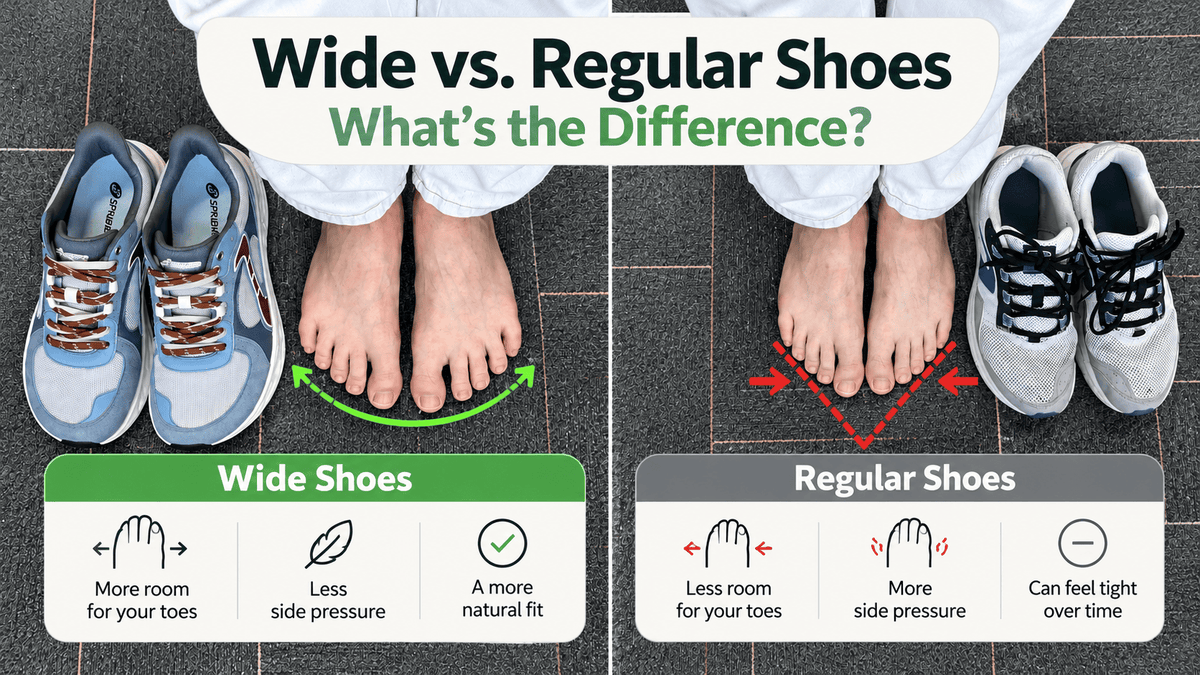
Wide vs. Regular Shoes: What's the Difference?
Finding the right pair of shoes isn't just about choosing the correct length. Width matters, too.
You might wear your usual shoe size and still notice pressure along the sides of your feet, crowded toes, or discomfort after a long day of standing or walking. In some cases, the issue isn't the shoe size—it's the shoe width.
So, what's the difference between wide and regular shoes, and how do you know which one is right for you?
In this guide, we'll explain how shoe widths work, compare wide and regular shoes, and help you find a more comfortable fit.
What Are Regular and Wide Shoes?
Regular shoes, also called standard-width or medium-width shoes, are designed for feet that fit comfortably within standard shoe widths.
Wide shoes provide additional width compared with regular shoes in the same size. Depending on the design, that extra space may be most noticeable around the forefoot.
In US shoe sizing, the most common width labels are:
-
Men's: D = Standard, 2E = Wide
-
Women's: B = Standard, D = Wide
One important thing to remember: wide shoes aren't simply bigger shoes. A US size 9 Wide is designed to offer more width than a US size 9 Regular, without necessarily being longer.
Wide vs. Regular Shoes: Key Differences
Here's a quick comparison to help you understand how the two fits differ.
| Feature | Regular Shoes | Wide Shoes |
|---|---|---|
| Width | Standard fit | Extra width |
| Forefoot Space | Designed for standard-width feet | May offer more room across the forefoot |
| Fit | Best for feet that fit standard widths | Best for feet that need additional width |
| Men's US Width | D | 2E |
| Women's US Width | B | D |
More Room Where You Need It
The biggest difference is how much space the shoe provides across your foot.
If your shoes fit well in length but feel tight around the sides of your forefoot, a wider option may feel more comfortable.
However, shoe shape matters, too. A wide toe box isn't necessarily the same as a wide-width shoe. Some shoes offer extra toe room without being wider throughout the entire shoe.
A Better Fit, Not Just a Wider Shoe
Wide shoes aren't automatically softer, more supportive, or more comfortable than regular shoes.
Comfort also depends on cushioning, arch support, materials, and how securely the shoe fits your heel.
The right width should give your foot enough room without allowing excessive movement.
Who Might Benefit From Wide Shoes?
You don't need to have a specific foot condition to consider wide shoes. Sometimes, your natural foot shape is reason enough.
1. People With Naturally Wide Feet
If standard-width shoes regularly feel tight along the sides, even when the length is right, you may benefit from a wider fit.
2. People Who Need More Toe Room
Do your toes feel crowded or pressed together?
A shoe with a roomier forefoot may give your toes more space to rest naturally. Just remember that toe-box shape and overall shoe width aren't always the same.
3. People Who Spend Long Hours on Their Feet
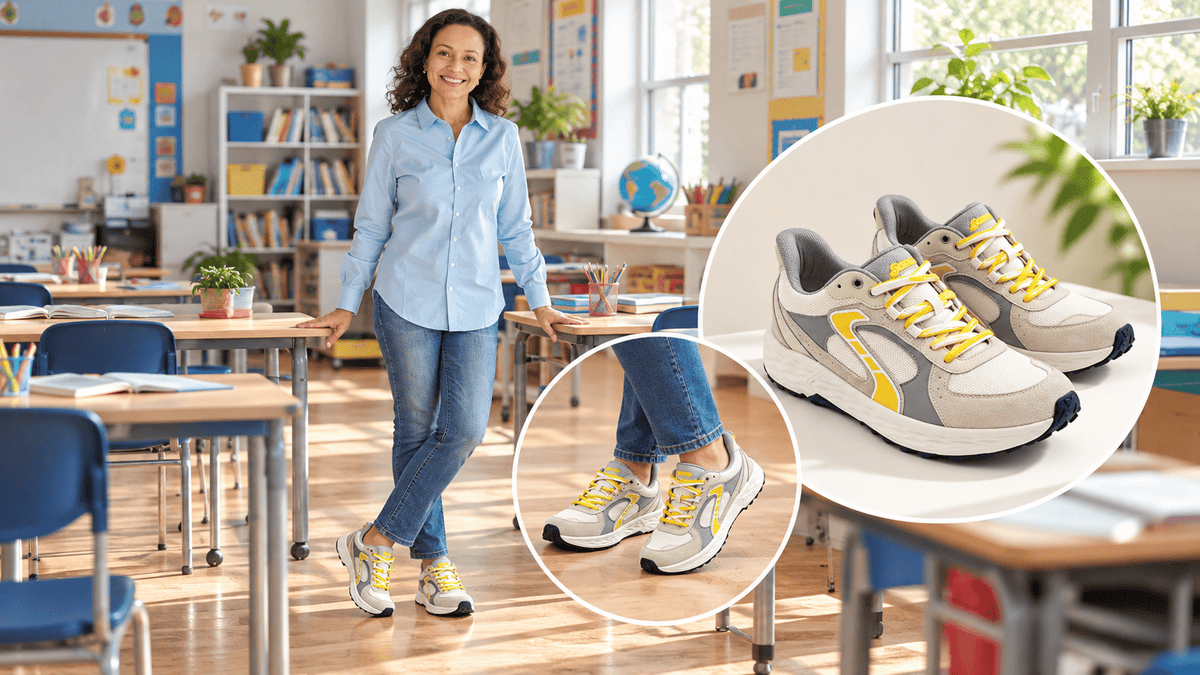
From nurses and caregivers working long shifts to teachers, cashiers, chefs, and hairstylists who spend hours standing, comfortable footwear can make a difference throughout the day. Older adults and pregnant women may also appreciate shoes that provide a comfortable, accommodating fit for everyday activities.
If your shoes feel too narrow, choosing the right width may help reduce pressure and give your feet more room. Cushioning, support, and a secure fit are just as important for all-day comfort.
4. People Whose Feet Feel Tighter Later in the Day
Your feet can change in volume throughout the day, especially after hours of standing or walking.
If your shoes feel noticeably tighter by the afternoon, it may be worth reassessing their fit and width.
How to Tell If Your Shoes Are Too Narrow
Not sure whether you need wide shoes? Look for these common signs:
-
Your toes feel crowded. There's little room for them to move comfortably.
-
The sides feel tight. You notice squeezing around your forefoot.
-
The length feels right, but the width doesn't. Going up a size adds unwanted length without solving the tightness.
-
Your feet press against the upper. The shoe feels restrictive across the sides of your foot.
These signs can suggest a width or shape mismatch, but they don't always mean you need a wide-width shoe.
If the tightness is mainly over the top of your foot, you may need more instep room rather than extra width.
How to Choose the Right Shoe Width
Finding a comfortable fit doesn't have to be complicated.
1. Start With Your Measurements
Measure both feet while standing, including their length and the widest part of the forefoot.
Feet aren't always identical in size, so use the larger measurements as a starting point.

2. Check the Width Labels
US shoe widths are commonly described as:
| Width | Men's | Women's |
|---|---|---|
| Narrow | B | A |
| Standard | D | B |
| Wide | 2E | D |
| Extra Wide | 4E | 2E |
| XX-Wide | 6E | 4E |
Width labels are general references. Actual fit and available widths vary by brand and style.
Need help understanding shoe sizes? Visit the Spriova Size Guide.
3. Pay Attention to How the Shoes Feel
A well-fitting shoe should:
-
Give your toes enough room to move naturally.
-
Feel comfortable across the widest part of your foot.
-
Hold your heel securely without excessive slipping.
-
Feel comfortable when standing and walking.
Try shoes with the socks you normally wear, ideally later in the day when your feet may be slightly larger.
4. Don't Automatically Size Up
If your shoes feel too narrow, buying a longer size isn't always the answer.
Sizing up can create extra length, which may lead to heel slipping or an awkward fit.
Instead, look for a shoe with the right combination of length, width, and shape.
Are Wide Shoes Better Than Regular Shoes?
Not necessarily.
If regular-width shoes fit your feet comfortably, there's no reason to switch simply because wide shoes offer more space.
But if you regularly experience squeezing around your forefoot, a wider fit may be worth trying.
The best shoe isn't the widest or the softest. It's the one that fits your feet comfortably.
Find Your Fit With Spriova
At Spriova, we believe everyday comfort starts with a fit that works for your feet.
Our footwear focuses on thoughtful comfort features, including roomier forefoot designs, cushioning, and support in selected styles.
Whether you're on your feet throughout the workday or simply looking for comfortable everyday shoes, understanding your size and width is a good place to start.
Explore our Size & Width Guide to find a fit that works for you.




Leave a comment
This site is protected by hCaptcha and the hCaptcha Privacy Policy and Terms of Service apply.